







Morocco Eye Back-to-Back Knockouts as Saibari Fires Atlas Lions
Four points from two matches rarely sounds like the stuff of headlines, yet for Morocco the arithmetic carries unusual weight. A 1-1 draw with Brazil followed by a 1-0 win over Scotland has left the Atlas Lions perched on the edge of the knockout rounds, and a victory over Haiti on 24 June would seal something this football nation has never managed before: a second consecutive escape from the group stage at a World Cup.
The point that proved Morocco belong
Drawing with Brazil is the kind of result that reframes how a team is seen. Ismael Saibari struck first, putting Morocco ahead on 21 minutes, and although Vinicius Jr levelled eleven minutes later, the share of the spoils felt earned rather than gifted. Brazil arrived as one of the tournament’s headline acts; Morocco refused to play the supporting role written for them.
That opening night mattered for reasons beyond a single point on the table. It set the emotional tone for everything that followed. A squad capable of trading blows with Brazil walks into its next assignment carrying belief rather than anxiety.
Why the Brazil draw travels well
- Saibari’s early goal showed Morocco would attack rather than simply contain.
- Vinicius Jr’s equaliser tested their composure, and they did not fold.
- A point against a tournament favourite gave the campaign immediate momentum.
There is a psychological economy to results like this. One evening against elite opposition can buy a team weeks of conviction, and Morocco have spent that credit wisely, knowing the gap to the supposed giants is a matter of fine margins, not class.
Scotland, and the value of getting it done
If the Brazil draw was about ambition, the Scotland win was about ruthlessness. Saibari again provided the decisive moment, scoring after roughly seventy seconds to settle the contest almost before it had begun. A 1-0 victory secured through an early strike is a study in game management: take the lead, then control the tempo, deny the opponent rhythm, and protect the advantage with discipline rather than risk.
Saibari’s two goals across the opening fixtures have made him the campaign’s central figure, the player whose timing has repeatedly tilted matches Morocco’s way. Scoring inside the first two minutes against Scotland did more than open the scoring; it forced Scotland to chase a game they had hoped to keep tight, handing Morocco the kind of structural control they thrive on.
Winning the matches you are expected to win, while drawing the ones you are not, is the unglamorous formula behind every successful group campaign. Morocco have followed it almost to the letter, and four points now leave them needing only to finish the job against the weakest opponent in their section.
The Hakimi factor and a century in sight
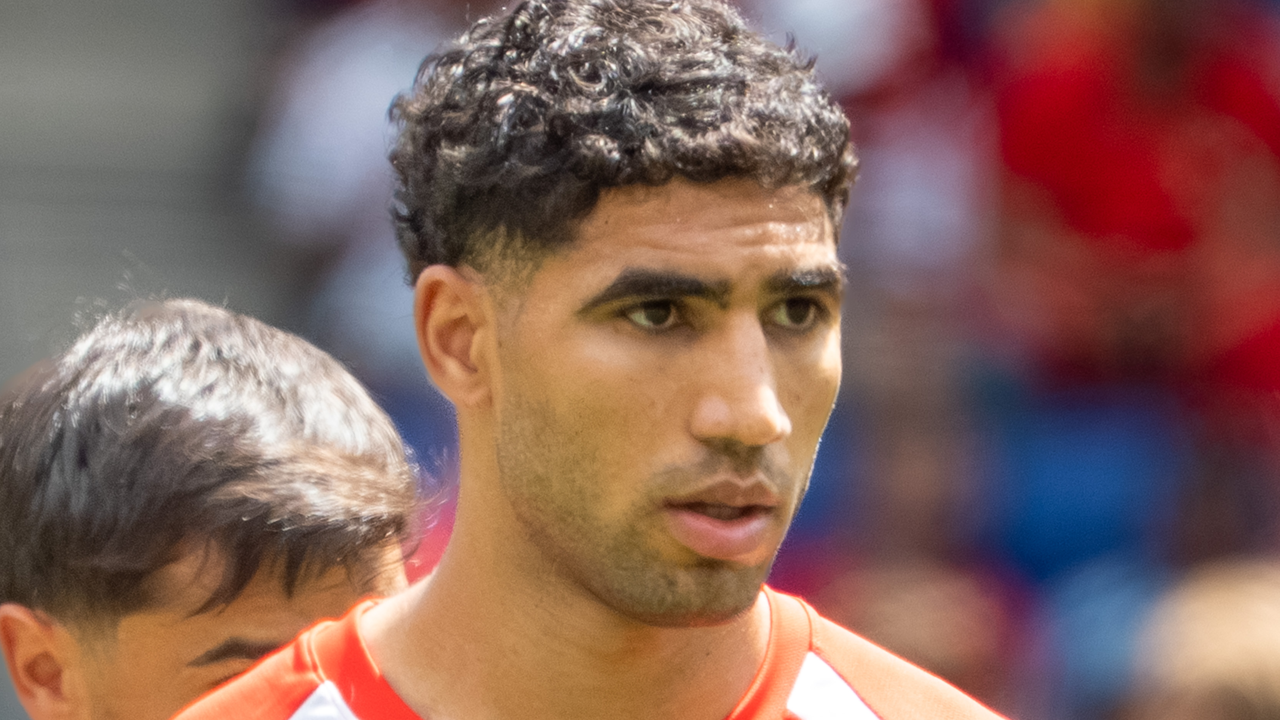
No account of this Morocco side is complete without its captain. Achraf Hakimi, the Paris Saint-Germain full-back and a Champions League winner, is approaching his 100th international cap, a milestone that would crown one of the most accomplished careers in the country’s history.
Hakimi’s value is not measured only in overlapping runs and dangerous deliveries. It is felt in the standard he sets and the calm a Champions League pedigree brings to high-pressure nights. As he closes in on a century of caps, his presence anchors a squad that has learned to carry expectation rather than buckle beneath it.
From one deep run to a pattern
The 2022 semifinal turned Morocco from outsiders into a story the football world could not ignore. The danger, as with any single great campaign, is that it becomes remembered as a one-off, a perfect storm unlikely to repeat. Reaching the knockout rounds again, in the very next tournament, would begin to dismantle that narrative.
That is the quiet significance of the Haiti fixture. A place in the last sixteen would mark Morocco’s first back-to-back group-stage exits into the knockouts, transforming a famous run into the foundations of something more durable.
Haiti await, with the maths in Morocco’s favour
Haiti arrive at the final group game already eliminated, their own campaign ended before this meeting. That reality shapes the contest without deciding it. Morocco know a win guarantees progress, and on paper they hold every advantage: superior quality, momentum from four points, and a captain chasing personal history.
The professional approach is to treat the fixture with the same seriousness Morocco brought to Brazil and Scotland. An eliminated side can still play with freedom, and complacency has undone stronger teams. For a group eyeing a historic second consecutive knockout appearance, the instruction will be simple: respect the occasion and close out the result the way they did against Scotland.
You can track Morocco’s progress through our coverage hubs, including the latest from the World Cup and dedicated pages following Morocco and captain Achraf Hakimi.
Frequently asked questions
How many points do Morocco have at the World Cup?
Morocco have four points from two matches. They drew 1-1 with Brazil, with Ismael Saibari scoring on 21 minutes and Vinicius Jr equalising on 32, then beat Scotland 1-0 thanks to a Saibari goal after about seventy seconds.
Why would reaching the knockouts be historic for Morocco?
Morocco reached the semifinals in 2022. Advancing again would give them back-to-back group-stage exits into the knockout rounds for the first time, turning a single celebrated run into a sustained pattern of success.
What does Morocco need against Haiti?
A win over already-eliminated Haiti on 24 June would secure Morocco’s place in the knockout stage. The game is still to be played, so the outcome is not yet known, but the maths strongly favour the Atlas Lions.
For all the talk of milestones and history, Morocco’s task remains refreshingly clear. Beat Haiti, and a famous chapter becomes the start of a longer book. Hakimi edges toward his hundredth cap, Saibari carries the goals, and a nation that once shocked the world prepares to prove the shock was a sign of things to come.


Comments
No comments yet — be the first to share your thoughts.